
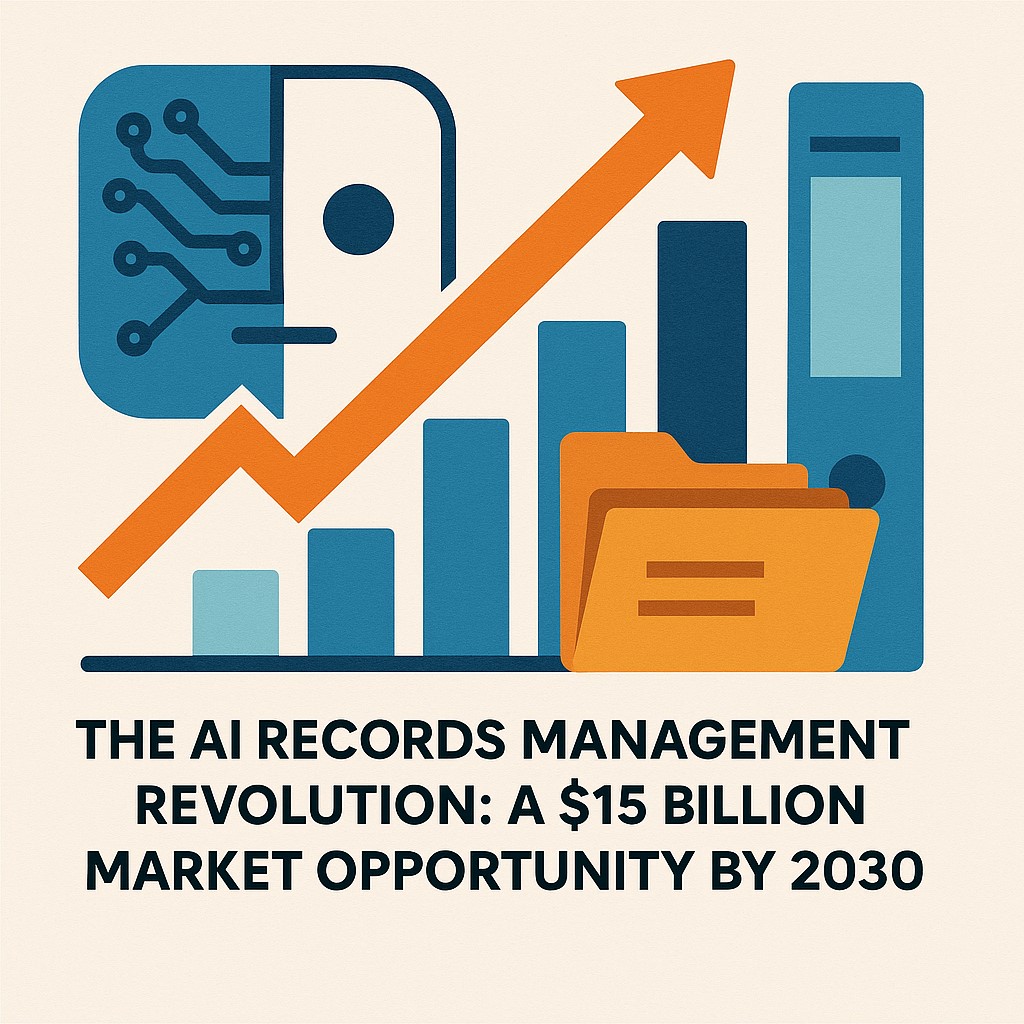
The intersection of artificial intelligence and records management is creating one of the most compelling enterprise technology opportunities of the decade. After analyzing market data and vendor capabilities, it’s clear we’re witnessing a fundamental shift that will reshape how organizations manage their most critical information assets.

The Numbers Tell a Powerful Story
The AI-powered records management market is projected to explode from $2.8-3.5 billion in 2025 to $12-15 billion by 2030, representing a 28-35% compound annual growth rate. This isn’t just another tech trend; it’s a response to real business pressures that are intensifying every year.
Consider this: global data creation is expected to reach 180 zettabytes by 2025, while at least 69 countries have proposed over 1,000 AI-related policy initiatives. Organizations are drowning in data while simultaneously facing unprecedented regulatory scrutiny. Traditional records management just can’t keep pace.
The Competitive Landscape is Reshaping
Three distinct vendor categories are emerging:
- Enterprise legacy leaders, such as Microsoft (Purview) and OpenText, are rapidly integrating AI into their established platforms. Microsoft’s unified approach to data governance and compliance is particularly compelling for large enterprises already invested in the Microsoft ecosystem.
- Specialized Document Management players, such as NetDocuments, are transforming themselves into “intelligent document management systems.” Their ndMAX AI suite, with legal-specific applications, demonstrates how vertical specialization can create a competitive advantage.
- AI-Native Innovators like RecordsKeeper.AI are building from the ground up with AI-first architectures, often incorporating blockchain for immutable audit trails. These players are pushing the boundaries of what’s possible.
The Real Business Impact
The transformative potential goes beyond efficiency gains. AI-powered systems are delivering:
- Automated compliance monitoring that adapts to regulatory changes in real-time
- Intelligent classification achieving 95%+ accuracy for document categorization
- Predictive insights that help organizations anticipate compliance risks before they materialize
- Cost reduction through automation of routine tasks like data entry and document filing
Strategic Implications for Leaders
For executives evaluating this space, the key is understanding that this isn’t just about technology, it’s about organizational transformation. Success requires:
- Starting with high-impact, low-risk use cases to build internal confidence and capabilities
- Investing in AI literacy across information management teams
- Establishing governance frameworks for responsible AI implementation
- Planning for integration complexity with existing enterprise systems
Looking Ahead
The following 18 months will be critical. Organizations that move decisively to pilot AI-powered records management will gain significant competitive advantages. Those who wait risk falling behind in an increasingly data-driven business environment.
The question isn’t whether AI will transform records management, it’s whether your organization will lead the transformation or scramble to catch up.
What’s your organization’s strategy for AI-powered information governance? I’d love to hear your thoughts and experiences in the comments.
This analysis is based on comprehensive market research conducted in January 2025, examining vendor capabilities, market dynamics, and industry trends across the AI-powered records management landscape.